






Trade global indices with a broker you can trust
Trade the world's most prominent stock market and currency indices, with leveraged CFDs from Pepperstone, a leading global broker.
| Symbol | Razor Min Spread | Razor Avg Spread | Standard Min Spread | Standard Avg Spread |
|---|---|---|---|---|
| US30 | 2 | 2 | 2 | 2 |
| US500 | 0.4 | 0.4 | 0.4 | 0.4 |
| NAS100 | 1 | 1.3 | 1 | 1.3 |
| US2000 | 0.3 | 0.3 | 0.3 | 0.3 |
| VIX | 1.6 | 1.6 | 1.6 | 1.6 |
| CA60 | 8 | 8 | 8 | 8 |
What is index CFD trading?
Stock indices, like the S&P 500 and ASX 200, track the performance of bundles of stocks. They allow traders to take a general position on 'the stock market' itself, rather than targeting specific companies.
CFDs are versatile derivative products that allow you to speculate on movements in popular stock indices, offering a number of key benefits.

Up to 20x leverage
CFDs are traded on margin, so you only have to put down a fraction of the value of your position.
This allows you to gain exposure to major indices with less capital upfront. It also means gains and losses are magnified, making risk management essential.

Long and short opportunities
With CFDs you can trade both rising and falling markets, increasing opportunities to profit.
This enables you to respond to changing market conditions without directional limits. Whether markets rise or fall, you can adjust your strategy accordingly.
Up to 20x leverage
CFDs are traded on margin, so you only have to put down a fraction of the value of your position.
This allows you to gain exposure to major indices with less capital upfront. It also means gains and losses are magnified, making risk management essential.
Long and short opportunities
With CFDs you can trade both rising and falling markets, increasing opportunities to profit.
This enables you to respond to changing market conditions without directional limits. Whether markets rise or fall, you can adjust your strategy accordingly.
Long and short opportunities
With CFDs you can trade both rising and falling markets, increasing opportunities to profit.
This enables you to respond to changing market conditions without directional limits. Whether markets rise or fall, you can adjust your strategy accordingly.
Up to 20x leverage
CFDs are traded on margin, so you only have to put down a fraction of the value of your position.
This allows you to gain exposure to major indices with less capital upfront. It also means gains and losses are magnified, making risk management essential.
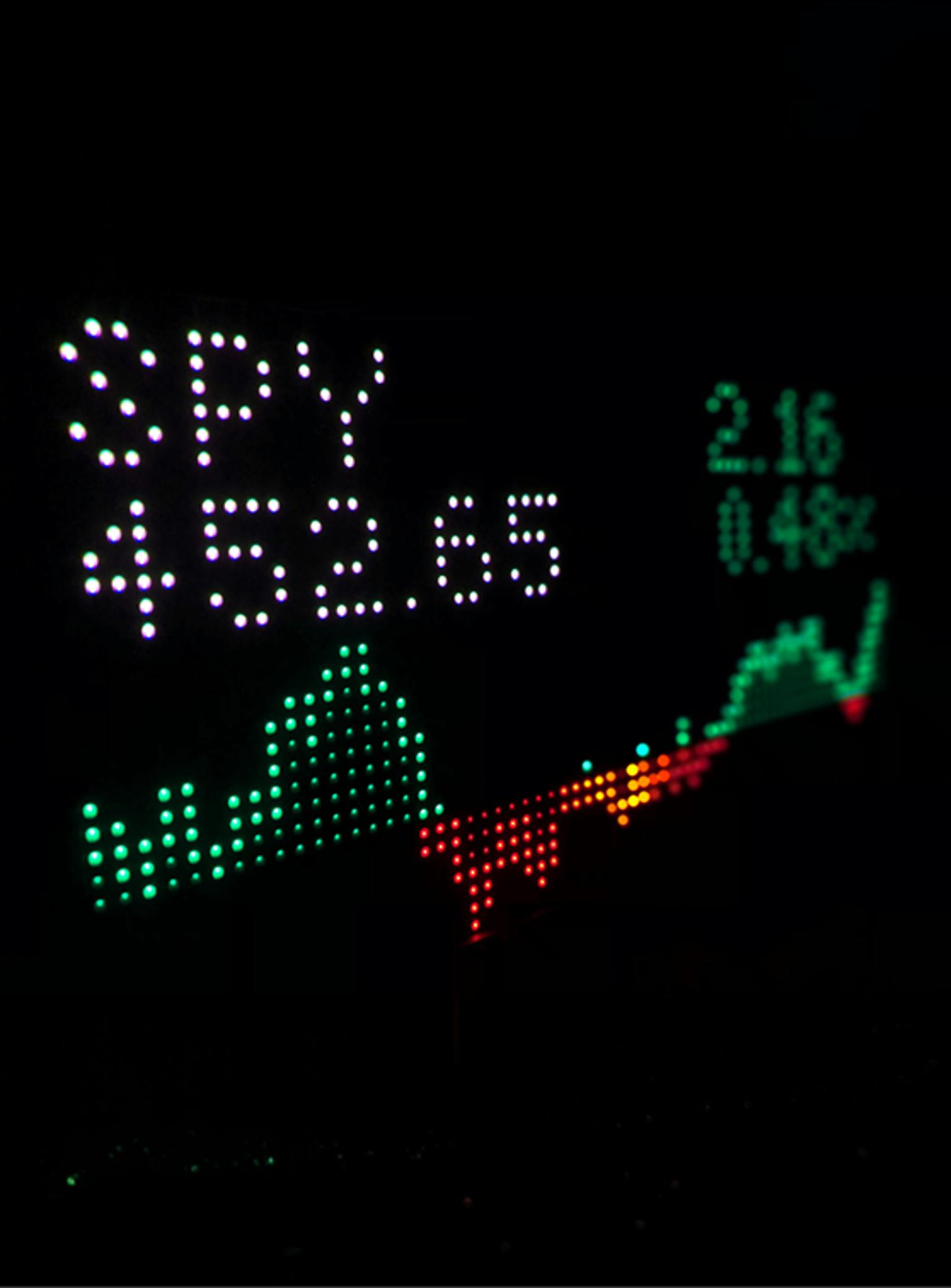
A way into global markets
In addition to indices, you can trade CFDs on shares, commodities, crypto and more.
This gives you access to a wide range of global markets from one account. It also supports more flexible strategies across different asset classes.
A way to hedge your shares
If you hold various stocks you can hedge against falling prices by selling an index CFD.
This can help offset potential losses during market downturns. It provides a way to manage risk without needing to exit your underlying positions.
A way into global markets
In addition to indices, you can trade CFDs on shares, commodities, crypto and more.
This gives you access to a wide range of global markets from one account. It also supports more flexible strategies across different asset classes.
A way to hedge your shares
If you hold various stocks you can hedge against falling prices by selling an index CFD.
This can help offset potential losses during market downturns. It provides a way to manage risk without needing to exit your underlying positions.
A way to hedge your shares
If you hold various stocks you can hedge against falling prices by selling an index CFD.
This can help offset potential losses during market downturns. It provides a way to manage risk without needing to exit your underlying positions.
A way into global markets
In addition to indices, you can trade CFDs on shares, commodities, crypto and more.
This gives you access to a wide range of global markets from one account. It also supports more flexible strategies across different asset classes.
Why trade index CFDs with Pepperstone?
Please note that trading index CFDs involves speculating on price movements, with no ownership of the underlying asset. CFDs are leveraged products, which means your exposure is magnified and you could lose more than your initial deposit. Consider using tools such as stop-losses to mitigate your risk.
Razor sharp spreads
Prices sourced from multiple Tier 1 banks and liquidity providers, with no commission.
Trade almost around the clock
We offer access to major indices like US30, UK100 and GER30 from 1:00–23:59, Monday-Friday.
Platforms and tools
Choose from TradingView, MT4 and MT5, cTrader and our own Pepperstone platform.
Speed and reliability
Execution speeds from 50 milliseconds, a 99.32% fill rate and no dealer intervention.¹
Razor sharp spreads
Prices sourced from multiple Tier 1 banks and liquidity providers, with no commission.
Trade almost around the clock
We offer access to major indices like US30, UK100 and GER30 from 1:00–23:59, Monday-Friday.
Platforms and tools
Choose from TradingView, MT4 and MT5, cTrader and our own Pepperstone platform.
Speed and reliability
Execution speeds from 50 milliseconds, a 99.32% fill rate and no dealer intervention.¹
What indices can you trade with Pepperstone?
Choose from more than 20 cash stock indices tracking global stock markets including the Dow, S&P 500, NASDAQ, FTSE 100, DAX, Nikkei, S&P/ASX 200 and Hang Seng.
We also offer three currency index markets and CFD contracts on some major stock indices.
Available as cash and forward markets: | Available as cash markets only: |
US30 | US2000 |
US500 | VIX |
NAS100 | CA60 |
Now available for 23/5 trading: HSTECH, US400 and TAIEX CFDs
Expand your market exposure with three new index CFDs, now available for 23/5 trading on MT5 and cTrader:
HSTECH (Hang Seng Tech Index)
Track China's leading technology companies, offering exposure to innovation-driven growth across Hong Kong-listed tech giants.
US400 (S&P 400 MidCap)
Capture the performance of mid-sized US companies, often seen as a balance between large-cap stability and small-cap growth potential.
TAIEX (FTSE Taiwan RIC Capped Index)
Gain access to Taiwan's equity market, heavily influenced by global semiconductor and technology supply chains.
HSTECH (Hang Seng Tech Index)
Track China's leading technology companies, offering exposure to innovation-driven growth across Hong Kong-listed tech giants.
US400 (S&P 400 MidCap)
Capture the performance of mid-sized US companies, often seen as a balance between large-cap stability and small-cap growth potential.
TAIEX (FTSE Taiwan RIC Capped Index)
Gain access to Taiwan's equity market, heavily influenced by global semiconductor and technology supply chains.
HSTECH (Hang Seng Tech Index)
Track China's leading technology companies, offering exposure to innovation-driven growth across Hong Kong-listed tech giants.
US400 (S&P 400 MidCap)
Capture the performance of mid-sized US companies, often seen as a balance between large-cap stability and small-cap growth potential.
TAIEX (FTSE Taiwan RIC Capped Index)
Gain access to Taiwan's equity market, heavily influenced by global semiconductor and technology supply chains.
HSTECH (Hang Seng Tech Index)
Track China's leading technology companies, offering exposure to innovation-driven growth across Hong Kong-listed tech giants.
US400 (S&P 400 MidCap)
Capture the performance of mid-sized US companies, often seen as a balance between large-cap stability and small-cap growth potential.
TAIEX (FTSE Taiwan RIC Capped Index)
Gain access to Taiwan's equity market, heavily influenced by global semiconductor and technology supply chains.
Start trading index CFDs today
Sign up now for free to trade 20+ index CFDs with a broker trusted by 830K+² global clients.

How much does index CFD trading cost?
Our spreads are always very competitive,3 but vary by market and conditions. We don’t charge commission on index CFDs.
Learn more about trading indices
Read expert-written guides on the world's most traded indices.








Indices trading FAQs
A stock index is essentially a number tracking the performance of a particular bundle of stocks, acting a key indicator of the strength of an associated economy or sector. The most prominent national stock indices, such as the FTSE 100, CAC 40 and DAX in Europe, tend to include the country's biggest companies, with each stock's contribution to the index weighted according to its size (market capitalisation).
Currency indices are a popular tool for forex traders. They measure direct changes in the value of a currency against a basket of other currencies. This differs from a typical currency pair which only involves two currencies. For example, the US dollar index measures the value of the US dollar against a basket of currencies, including the euro, yen, pound sterling, Canadian dollar, Swiss franc, and Swedish krona.
Currency index CFDs provide traders with a broader approach to the forex market. For example, if you believe the US Dollar is likely to strengthen against multiple other currencies, then the US Dollar Index could help you gain that exposure without having to open positions on multiple USD pairs.
A Forward contract is a financial arrangement where two parties agree to execute a transaction involving the purchase or sale of a specific asset at a predetermined date and price in the future. This contractual agreement is tailored to the participants' needs, allowing for flexibility in terms of the underlying asset, quantity, and settlement terms.
The absence of a centralised exchange makes forwards incredibly versatile, unlike standardised futures contracts traded on exchanges, forwards are typically negotiated directly between the parties.
Forwards: Traded over-the-counter (OTC), directly between the two parties involved in the contract. These contracts are customizable and are privately negotiated between two parties. The terms, such as the quantity, price, and delivery date, are agreed upon individually.
Futures: Traded on organised exchanges, such as the Chicago Mercantile Exchange (CME) or Eurex. Futures contracts are standardized and traded on organized exchanges. The terms of the contract, including the size of the contract and the delivery date, are predetermined by the exchange.
Trading hours are subject to change due to seasonal and market factors, but our standard hours are (GMT+3 when US DST is in place, GMT+2 at all other times):
Symbol | Mon | Tue-Thu | Fri | Sat & Sun |
|---|---|---|---|---|
AUS200 | 02:50–09:30 10:10–23:59 | 02:50–09:30 10:10–23:59 | 02:50–09:30 10:10–23:55 | Closed |
UK100 | 03:05–22:59 | 03:00–22:59 | 03:00–22:55 | Closed |
US500 | 01:00–23:59 | 01:00–23:59 | 01:00–23:55 | Closed |
GER40 | 03:15–22:59 | 03:15–22:59 | 03:15–22:55 | Closed |
US30 | 01:00–23:59 | 01:00–23:59 | 01:00–23:55 | Closed |
JPN225 | 01:00–23:59 | 01:00–23:59 | 01:00–23:55 | Closed |
NAS100 | 01:00–23:59 | 01:00–23:59 | 01:00–23:55 | Closed |
EUSTX50 | 03:15–22:59 | 03:15–22:59 | 03:15–22:55 | Closed |
FRA40 | 09:00–22:59 | 09:00–22:59 | 09:00–22:55 | Closed |
CA60 | 16:30–23:15 | 16:30–23:15 | 16:30–23:10 | Closed |
CHINAH | 04:15–07:00 08:00–11:30 | 04:15–07:00 08:00–11:30 12:15–19:55 | 04:15–07:00 08:00–11:30 12:15–19:55 | Closed |
NETH25 | 04:15–07:00 08:00–11:30 12:15–20:00 | 04:15–07:00 08:00–11:30 12:15–19:55 | 09:00–22:55 | Closed |
NOR25 | 09:00–22:59 | 09:00–22:55 | 10:00–17:15 | Closed |
SA40 | 09:30–18:30 | 09:30–18:25 | 09:30–18:25 | Closed |
GERTEC30 | 10:00–18:30 | 10:00–18:25 | 10:00–18:25 | Closed |
HK50 | 04:15–07:00 08:00–11:30 12:15–22:00 | 04:15–07:00 08:00–11:30 12:15–21:55 | 04:15–07:00 08:00–11:30 12:15–21:55 | Closed |
MidDE50 | 10:00–18:30 | 10:00–18:25 | 10:00–18:25 | Closed |
SWI20 | 09:00–22:59 | 09:00–22:55 | 09:00–22:55 | Closed |
SPA35 | 09:00–21:00 | 09:00–20:55 | 09:00–20:55 | Closed |
US2000 | 01:00–23:59 | 01:00–23:55 | 01:00–23:55 | Closed |
CN50 | 04:00–11:30 12:00–23:45 | 04:00–11:30 12:00–23:40 | 04:00–11:30 12:00–23:40 | Closed |
VIX | 01:00–23:59 | 01:00–23:55 | 01:00–23:55 | Closed |
SCI25 | 03:30–12:20 12:50–23:45 | 03:30–12:20 12:50–23:40 | 03:30–12:20 12:50–23:40 | Closed |
Currency indices standard trading hours (trading hours are subject to change due to seasonal and market factors):
Symbol | Mon | Tue-Thu | Fri | Sat & Sun |
|---|---|---|---|---|
USDX | 01:00–23:59 | 03:00–23:59 | 03:00–23:55 | Closed |
EURX | 01:00–23:59 | 01:00–23:59 | 01:00–23:55 | Closed |
JPYX | 01:00–23:59 | 01:00–23:59 | 01:00–23:55 | Closed |
Futures/forwards standard trading hours (trading hours are subject to change due to seasonal and market factors):
Symbol | Mon | Tue-Thu | Fri | Sat & Sun |
|---|---|---|---|---|
AUS200-F | 02:50–09:30 10:10–23:59 | 02:50–09:30 10:10–23:59 | 02:50–09:30 10:10–23:55 | Closed |
GER40-F | 01:05–03:00 03:15–23:59 | 01:00–03:00 03:15–23:59 | 01:00–03:00 03:15–22:55 | Closed |
JPN225-F | 01:00–23:59 | 01:00–23:59 | 01:00–23:55 | Closed |
NAS100-F | 01:00–23:59 | 01:00–23:59 | 01:00–23:55 | Closed |
UK100-F | 01:05–23:59 | 01:00–23:59 | 01:00–22:55 | Closed |
US30-F | 01:00–23:59 | 01:00–23:59 | 01:00–23:55 | Closed |
US500-F | 01:00–23:59 | 01:00–23:59 | 01:00–23:55 | Closed |
HK50-F | 04:15–07:00 08:00–11:30 12:15–22:00 | 04:15–07:00 08:00–11:30 12:15–22:00 | 04:15–07:00 08:00–11:30 12:15–21:55 | Closed |
Crude-F | 01:00–23:59 | 01:00–23:59 | 01:00–23:55 | Closed |
Brent-F | 01:00–23:59 | 03:00–23:59 | 03:00–23:55 | Closed |
XAUUSD-F | 01:01–23:59 | 01:01–23:59 | 01:01–23:55 | Closed |
XAGUSD-F | 01:01–23:59 | 01:01–23:59 | 01:01–23:55 | Closed |
When companies pay out an amount per share in dividends, it usually causes the share price itself to fall by the same amount, reflecting the reduction in value to new investors once the dividend has been paid.
If some of a stock index's constituent companies pay dividends at the same time, this may affect the price of the index. The more heavily weighted the companies issuing dividends are within the index, the greater the potential impact on the price.
We make sure that dividend adjustments like this don’t affect CFD position by debiting or crediting your account with the amount incurred on the running profit or loss.
Ready to trade better?
Register
Sign up with your email address or social account.
Answer
We'll check whether our products are appropriate for you.
Verify
Your safety is our top priority.
Fund
That's it! You're ready to trade.
Ready to trade with Pepperstone?
1 Fill rates are based on all trades data between 01/01/2026 and 31/03/2026.
2 Total number of accounts held with the Pepperstone Group globally, correct as of 1 March 2026.
3 Other fees may apply, such as overnight funding charges.