- English
- 中文版


April 2026 US Employment Report: Solid Payrolls Print Keeps Fed In ‘Wait & See’ Mode

Payrolls Top Expectations
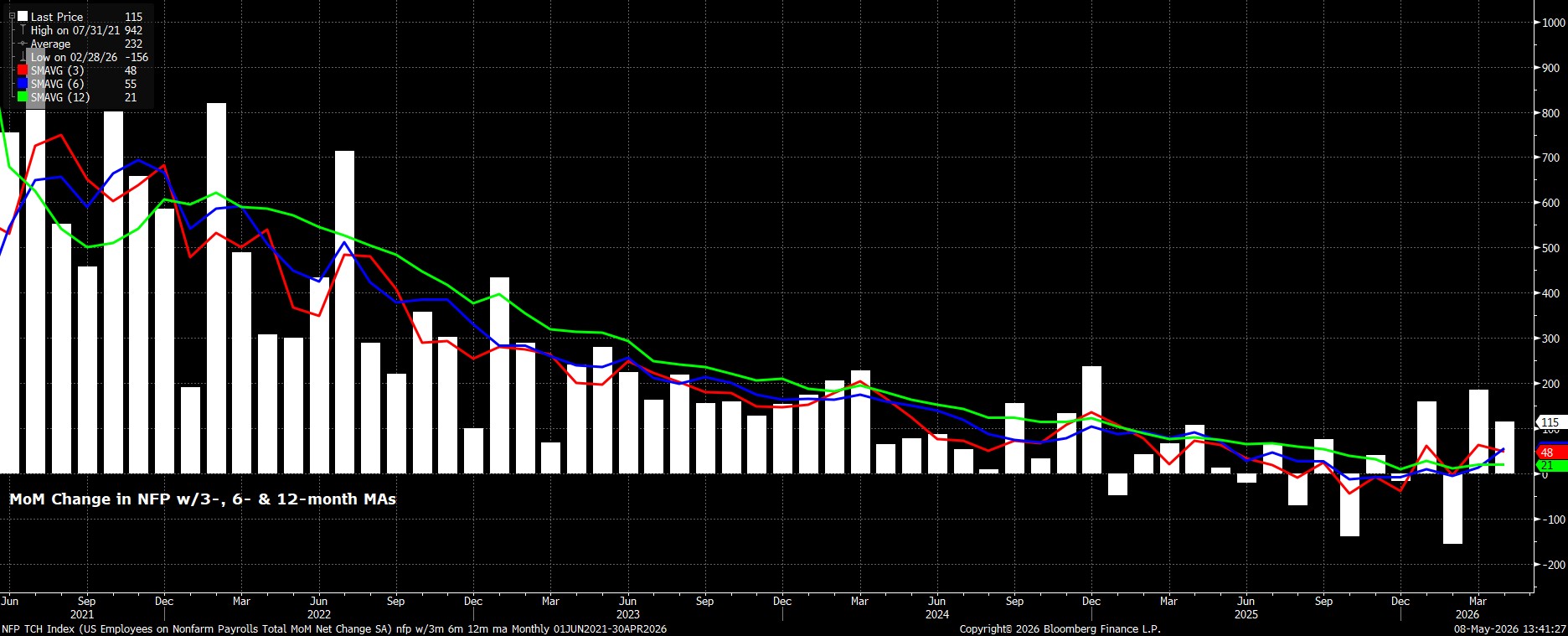
Headline nonfarm payrolls rose by +115k last month, above consensus expectations for a +65k increase, albeit while remaining within the typically-wide forecast range of -15k to +140k.
In addition to the April print, the prior two payrolls prints saw a net revision of -16k, as a result taking the 3-month moving average of job gains to +48k, around 20k lower than this time last month, though still comfortably above the breakeven pace, which is likely somewhere around zero. That said, considering that NFP is likely overstating job growth by around 60k per month, we are ultimately in a labour market that remains one of ‘slow hiring, and slow firing’ on the whole.
Under The Surface
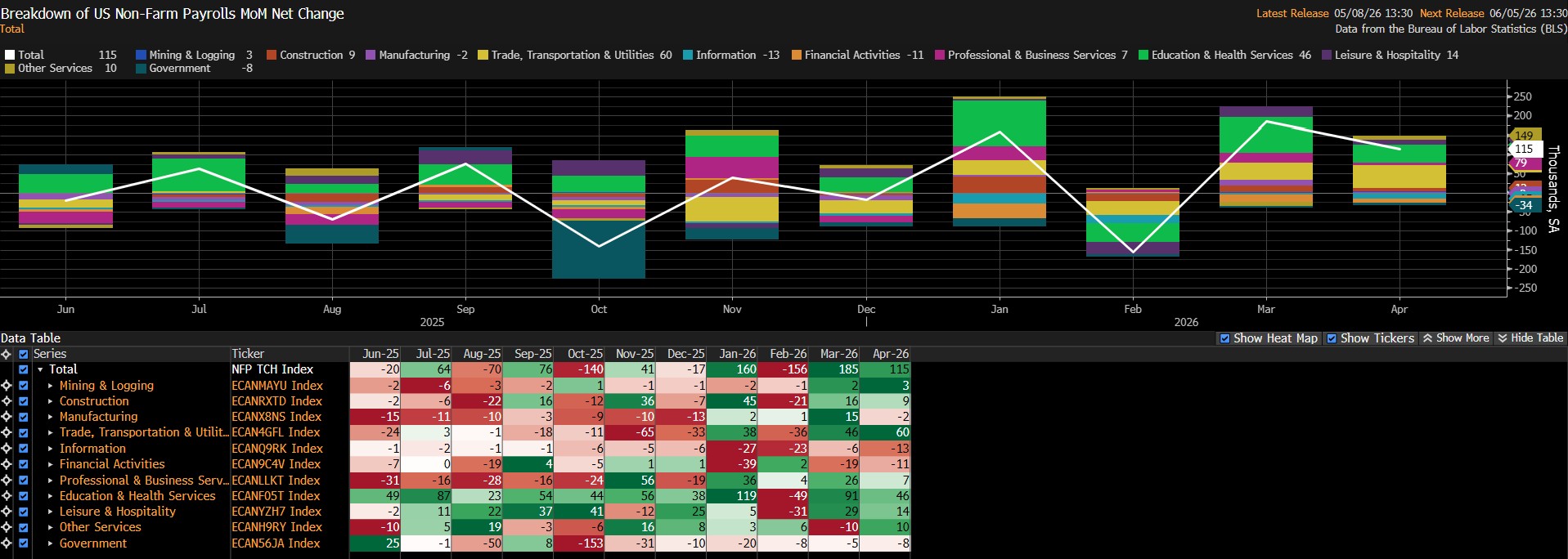
Taking a look at the details of the payrolls print, the sectoral split of job gains pointed to Healthcare and Education once again supporting the bulk of the rise in employment, as has often been the case in recent months. Importantly, both Information and Financial Activities saw MoM employment declines, which some may point to being reflective of increased AI adoption stunting employment growth in certain parts of the economy.
Earnings Pressures Contained
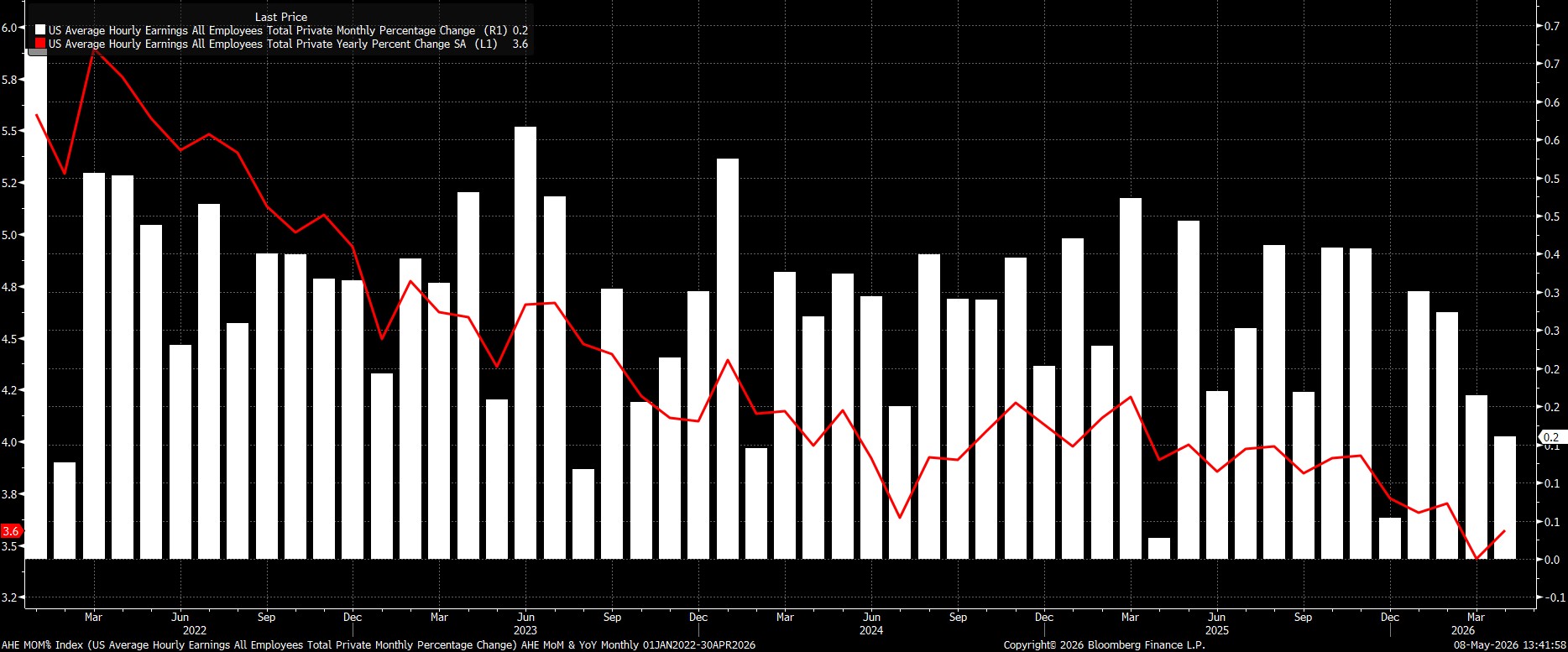
Meanwhile, remaining with the establishment survey, the jobs report pointed to earnings pressures remaining of relatively little concern. Average hourly earnings rose 0.2% MoM in April, a print that subsequently took the annual pace of earnings growth to 3.6% YoY, though this annual figure is somewhat skewed as a result of a base effect from this time last year.
In any case, broadly speaking, earnings growth continues to run at roughly target-consistent levels, with the labour market clearly not posing much, if anything, by way of upside inflation risks for the time being. Those risks are present, however, principally as a result of higher energy prices, and ongoing supply chain disruption, stemming from conflict in the Middle East.
Household Survey A Mixed Bag
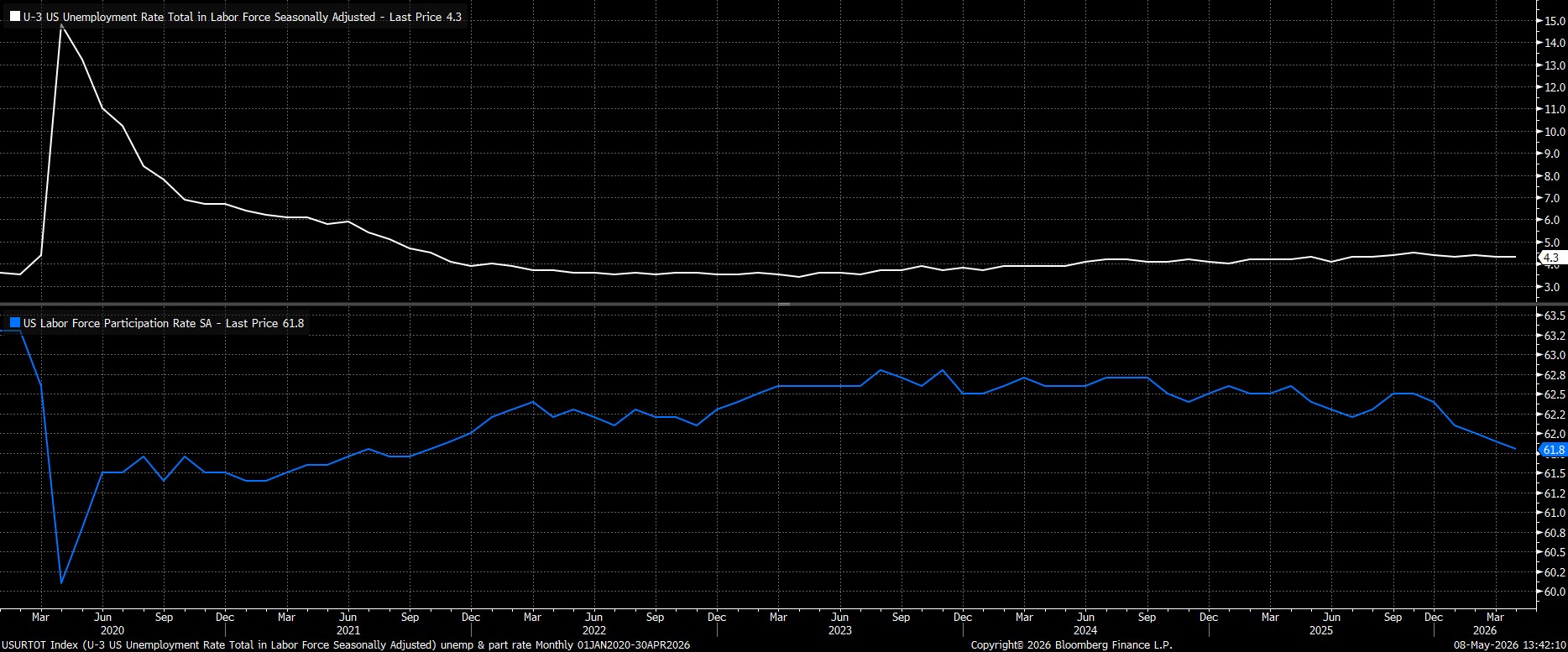
Turning to the household survey, headline unemployment held steady at 4.3%, in line with expectations. However, other areas of the HH survey were somewhat softer, with underemployment (U-6) unexpectedly rising 0.2pp to 8.2%, and with labour force participation printing new lows at 61.8%. In other words, the U-3 rate was unchanged not due to a surge in employment, but due to more people leaving the labour force.
As has been the case for some time now, the household survey remains of more importance from a policy perspective, as the FOMC attempt to gauge how significant the risks of second-round inflationary effects emerging may be, and thus how persistent energy-induced price pressures may prove to be. Those risks, however, do appear relatively low for the time being.
Money Markets Little Changed
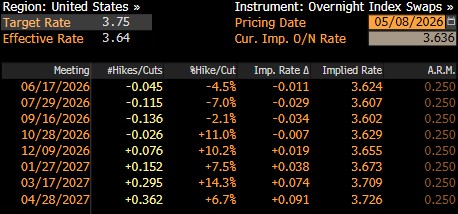
As the jobs report was digested, money markets were largely unreactive, with swaps continuing to discount essentially no change of any Fed policy action this year. In fact, markets on the whole weren’t especially bothered about the jobs data, with a very muted cross-asset reaction on display.
Conclusion
Zooming out, the April jobs report changes relatively little in the grand scheme of things, serving largely to reiterate that the labour market backdrop remains a relatively fragile one, of slow and narrow hiring, but also one of a slow pace of firing.
Looking ahead, the FOMC are set to remain in ‘wait and see’ mode for the time being, standing pat on rates as Chair nominee Warsh takes the helm, with focus for the time being remaining firmly on the inflation side of the dual mandate, as policymakers seek greater clarity on the magnitude and duration of the energy price shock, in addition to the potential for second-round effects to emerge.
Despite that, there remains a path to one or two rate reductions being delivered this year, assuming that the inflationary impact of events in the Middle East proves limited. Those cuts could come as a result of the continued ‘no hire, no fire’ labour dynamic prompting a desire to provide a degree of policy accommodation; pre-emptive easing amid belief in an AI-induced productivity boom; or, a need for easing as a result of Warsh being successful in shrinking, and tidying up, the Fed’s balance sheet.
The material provided here has not been prepared in accordance with legal requirements designed to promote the independence of investment research and as such is considered to be a marketing communication. Whilst it is not subject to any prohibition on dealing ahead of the dissemination of investment research we will not seek to take any advantage before providing it to our clients.
Pepperstone doesn’t represent that the material provided here is accurate, current or complete, and therefore shouldn’t be relied upon as such. The information, whether from a third party or not, isn’t to be considered as a recommendation; or an offer to buy or sell; or the solicitation of an offer to buy or sell any security, financial product or instrument; or to participate in any particular trading strategy. It does not take into account readers’ financial situation or investment objectives. We advise any readers of this content to seek their own advice. Without the approval of Pepperstone, reproduction or redistribution of this information isn’t permitted.